
ArcGIS Pro Fundamentals
GIS from the ground up: what spatial data are, how ArcGIS Pro works, and how to analyze data and make maps with it.
Welcome
GIS is a wonderful and powerful tool, and even a lot of fun once you understand the basics. In this class we'll cover the important fundamental concepts, such as what exactly GIS is, what spatial data are, and how to use one of the most common software packages (ArcGIS Pro) to analyze data and make maps.
If there's any downside to GIS, it's that the tools can be a little confusing to learn. Therefore I'm going to try and remove as much stress from this class as I can. My goal is to not only teach you GIS, but to show you how much fun it can be.
If you'd like to know more about me personally, please feel free to look over the instructor bio. Please get in touch as soon as you get stuck on anything or have any questions.
How the course works
- Every module has a document of lecture notes and lab exercises and the original slides; most also have lecture videos and walk-through videos of every lab exercise. Watch the lectures, then work through the labs; the labs are where the material sinks in.
- The lab exercises use ArcGIS Pro (some optional modules also use the Spatial Analyst extension). The written instructions are step by step, and the walk-through videos show every click.
- The course data used in the lab exercises is one download: Course data (Google Drive). Larger datasets that past students have found useful for their own projects are listed under Extra data.
- The modules can be taken in any order, but they are arranged so that each builds on the ones before it.
- When you are done, the Advanced ArcGIS Pro Topics course goes on to wildlife, terrain, watershed, proximity and interpolation analysis.
Modules
 Introduction to GIS and ArcGIS
3 lectures, 1 h 6 min · 9 lab walk-throughs
Module 2
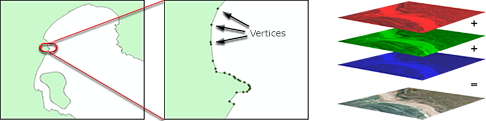 GIS Data Types
5 lectures, 1 h 56 min · 13 lab walk-throughs
Module 3
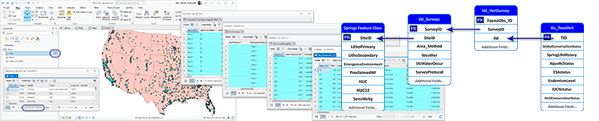 Selections, Joins and Relates
3 lectures, 1 h 10 min · 7 lab walk-throughs
Module 4
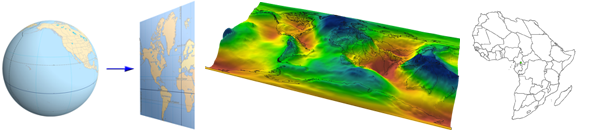 Projections and Datums
5 lectures, 1 h 53 min · 8 lab walk-throughs
Module 5
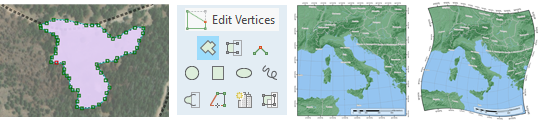 Creating and Editing Data
1 lecture, 28 min · 7 lab walk-throughs
Module 6
 Basic Geoprocessing and Automation
4 lectures, 1 h 8 min · 9 lab walk-throughs
Module 7
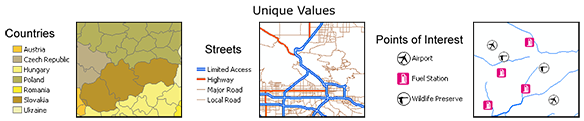 Symbolization and Cartography
1 lecture, 39 min · 12 lab walk-throughs
Optional
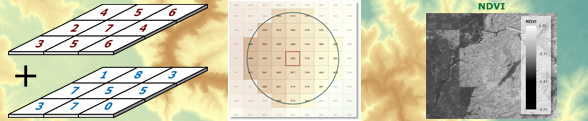 Raster Analysis and Topography
4 lectures, 1 h 22 min · 14 lab walk-throughs
Optional
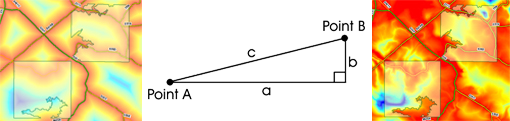 Proximity Analysis
slides and notes
Pay what you can
These courses are open to everyone and offered on a pay-what-you-can basis. If a course is useful to you, a payment of $20 or more per course is suggested; it supports the time that goes into recording, writing and keeping the material online.
Pay what you can with PayPal PayPal link to be added
If you would rather give the money to a good cause, consider a gift to the Lois Engelman Memorial Scholarship Fund at Northern Arizona University instead.
Puzzles, just for fun
Two little puzzles that went with the university version of this course. No points here, just the fun of working them out.
The coding puzzle
Given this list of words:

  ListOfWords = Array("I", "hard", "digest.", "ever", "the", "in", "end",
      "more", "always", "to", "The", "remember", "people", "church", "they",
      "comfortable.", "find", "follow", "only", "is", "who", "were", "would", "Mrs.", "that",
      "and", "one", "that", "go", "laid", "be", "Martha", "statistics", "impossible",
      "I", "if", "to", "end", "a", "B.", "are", "to", "can", "all", "sleep", "to",
      "lot", "Taft")

...and following these instructions:

  For each Counter_1 in 0 To 7
    For each Counter_2 in 0 To 5
      theAnswer = theAnswer & ListOfWords((Counter_1) + (Counter_2 * 8))
    Next Counter_2
  Next Counter_1
What words of wisdom are revealed? Hint: In most computer programming languages, the first item in a list is at Index 0. The second item is at Index 1, etc. Therefore the word at index 0 in the list is "I".
Show the answer
“I always find that statistics are hard to follow and impossible to digest. The only one I can ever remember is that if all the people who go to sleep in church were laid end to end they would be a lot more comfortable.” — Mrs. Martha B. Taft
The image puzzle
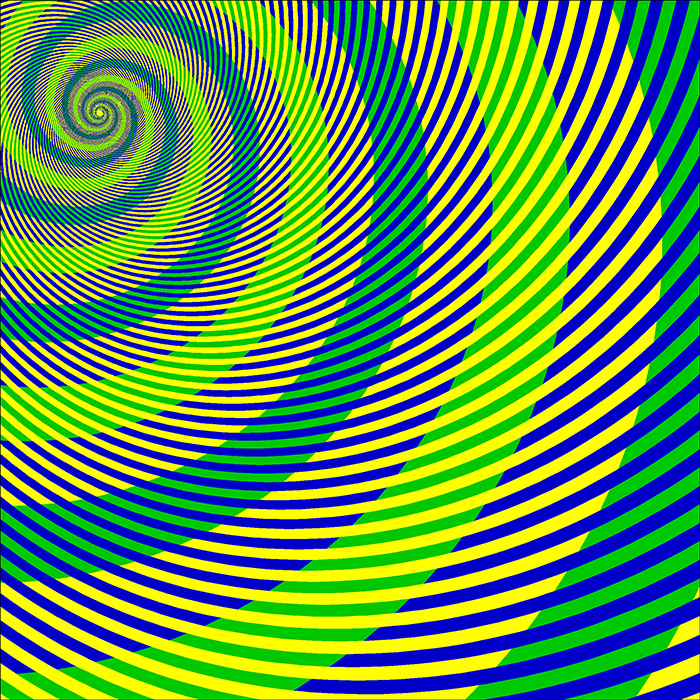
A good map will tell a story with color, but our brains perceive color in interesting ways! How many colors do you see in the image below?
[Answer to be added]